Discover how burst-on-application technology uses encapsulation and particle engineering to create innovative personal care formulations with tailored sensory experiences.
Written By
Aishwarya
Published on
10 October 2026
Tags
In personal care products, "burst-on-application" refers to a formulation technique in which the particle is designed to change form or release its contents when it comes into contact with the conditions of use. This differs from conventional particles that do not change form during formulation.
The reason for this transformation depends on the particle's nature. Friction, pressure, moisture, water, or even rubbing can affect how the particle reacts. For instance, a particle that dissolves in water could eventually transform when it comes into contact with moisture, while another particle may break or scatter from rubbing.
This distinguishes between simply adding an ingredient to a formula and turning it into a particle that reacts in application. The particle can be integrated into the user experience and affect the ingredient's presentation and dispersion.
The word “burst” does not always refer to an instantaneous and explosive event. In reality, application-induced behavior varies and may involve instant disintegration or dissolution, or more gradual dispersion or release, depending on the nature of the particles used, their structure and size, and application requirements.
This adds another dimension for formulators when thinking about innovations in personal care products: what a material does and when it becomes available to the consumer at the time of use.
A conventional cosmetic formulation contains an ingredient in a particular physical state from manufacture through to use. Particles activated by application offer a contrasting example because they can react with the formulation/user at the point of use.
One such benefit is the possibility to design a more unique sensory experience. A particle that can dissolve, disperse, or change through rubbing can add a significant element of change in texture and visual appeal. This would not only enhance the experience but also signal to consumers that a chemical reaction is taking place.
Application-activated systems can also modify an ingredient's presentation. Rather than being distributed as a standard powder or liquid ingredient, the ingredient may be incorporated into a visible or structural particle that interacts with the formulation during application.
From a formulation perspective, the particle can control how the ingredient interacts with the formulation matrix. The ingredient remains in its designed matrix until triggers like moisture, friction, pressure, and rubbing change the particle. This depends on the system's design.
This also creates opportunities for product differentiation. As personal care products become more functional and experiential, any ingredient that can change form during application becomes part of the product itself rather than just an ingredient in the formulation.
The goal is thus not to ensure that every ingredient "activates" through the application process, but rather to find instances when the application-activated approach would have significant value to the end product.
A particle in personal care does not automatically break or dissolve just by being added to the formulation. Particle performance depends on how it is developed, what it is made of, and the conditions it undergoes when applied to the product.
Particle composition is another critical factor. Differences in water solubility, cohesion, and material strength lead to different behaviors when exposed to water or friction. For instance, water-soluble materials dissolve gradually when they contact water. In contrast, less soluble materials break off and disperse.
Particle structure also determines performance. How materials are put together, the particle structure, and the matrix's binding strength may determine how quickly particles absorb moisture and how easily they disintegrate. The more porous the particle structure, the more quickly the particles interact with water; the denser the structure, the harder it is to handle.
Moisture or water interacting with such a particle can trigger a transformation meant to react with water. This interaction lets water penetrate the particle, break its bonds, and dissolve it.
During application, friction and pressure may trigger additional breakdown. Mechanical stress comes from rubbing between fingertips and skin, while mechanical destruction results from pressure during spreading. This is especially important if the particle is meant to change through rubbing rather than dissolve in the product.
Another set of conditions arises from the skin itself and from the application environment. Skin humidity, temperature, friction, and even the presence of water at the time of application can all affect particle behavior. This implies that a single particle can behave differently when applied to dry skin, wet skin, or a rinse-off product.
In conclusion, application-dependent behavior results from the combination of particle composition, particle structure, and the conditions under which the particle is applied. With this knowledge, a formulator can design the particle to dissolve, disintegrate, disperse, or break when needed.
Although a personal care product may change upon application, it is necessary to identify dissolving, dispersing, and breaking because these phenomena may look the same to the consumer but involve different physical processes and can be induced by different particle structures.
Dissolution is the process by which the material that makes up the particle is soluble in the surrounding medium, and its molecules/components diffuse into the medium. An example of a water-soluble particle is a particle that dissolves in water. This is because, after the particle is fully dissolved, it is no longer available as a solid. Many factors influence dissolution, such as the material's solubility, particle size, and surface area.
Dispersion is not always a case where the particle gets dissolved. In dispersion, the particle, or another component of the particle, disperses in the surrounding formula. This does not always mean the particles dissolve to form the formula; it can also mean they are simply small parts of the formula.
Breaking involves a major physical change in the particle. A larger particle could break down through mechanical actions like rubbing, pressure, or shearing. The broken pieces could then disperse or dissolve if they are made of a soluble material. Therefore, breaking can sometimes mark the beginning of a series of particle behaviors rather than its end.
These considerations matter when formulating application-based personal care particles. The formulation can be designed so the particle dissolves on exposure to moisture, disperses upon rubbing, or breaks under application pressure. There are some cases where a combination of all the above properties is possible. For instance, the particle might first break upon rubbing and then dissolve.
Understanding this distinction helps the formulator define the desired application behavior more clearly. Rather than asking whether a particle “bursts,” the right question is what the particle should do when the consumer applies it. The response could include dissolving, dispersing, breaking, or some combination of these behaviors.
A personal care particle's performance upon application depends heavily on its size, shape, composition, and internal structure. These characteristics play a key role in determining how the particle reacts to water, the formulation, and the skin.
Particle size can affect both how quickly a particle interacts with its environment and how it feels when applied. Smaller particles tend to have a larger surface area relative to their volume. As a result, these particles interact with the environment more quickly. Large particles will tend to be more prominent when applying the substance. Size is not the only factor that affects behavior.
Particle shape influences how they move, settle, and interact with the formulation. Smooth or rounded particles may deliver a different experience than other shapes. Particle shape can also affect how visible particles are within the formulation and how they distribute.
Composition affects how particles react in their surroundings. If the composition is water-soluble, it will facilitate dissolution, whereas it may resist breakdown, maintain its integrity, or decompose into smaller entities. The selection and combination of materials can affect particle strength, humidity resistance, surface properties, etc.
The particle's internal structure is another way to control its behavior. Porosity, density, matrix structure, coatings, and material distribution within the particle can affect moisture penetration and response to mechanical pressure. Higher porosity means more interaction with moisture, while higher density or a tighter structure makes the particle more resistant to mechanical action.
The characteristics mentioned above may also influence product texture and appearance. Texture properties, such as particle smoothness and grittiness when rubbed, may depend on particle size and shape. Particles’ color, opacity, transparency, surface finish, and size distribution may influence their visibility in the final product.
More importantly, these characteristics cannot act in isolation. For example, changing particle size affects surface area; altering chemical composition may affect strength or solubility; and changing structural form affects how it interacts with water or physical forces. Thus, particle engineering requires managing many properties at once.
The goal for personal care formulators is not just to make a particle with a specific size or shape. The goal is to balance size, shape, composition, and structure to match the particle's behavior in the final product.
In a typical case, raw material selection is based on functional attributes, and it is used in the formulation with little change in form. However, encapsulation technology allows you to include the active ingredient in a particle, so the material's form becomes important.
You can control properties such as particle size, composition, structure, surface properties, and even the appearance of the encapsulated ingredient. These properties affect how the ingredient is handled during processing, how well it stays in the formula, and how it behaves when consumers apply it.
In other words, an ingredient that usually comes as a powder can be turned into a visible particle that can be easily incorporated into a specific product form. A particle that reacts with water can be formulated to dissolve when applied, while another structure might be designed to disperse when rubbed on the skin.
This means the particle itself may become part of the consumer’s experience. The particle's look and shape could shape the formula's visual appearance, while its feel and action when applied could affect what the consumer sees or feels while using the product. The component in question would no longer be a raw material, but a delivery vehicle.
Encapsulation may separate the active substance from the formulation until the desired point of use. The particle may help control the active substance's interaction with the formulation during storage and make it available when it comes into contact with factors such as moisture, water, or mechanical force during application.
This shifts the focus from "adding an ingredient to a formulation" to "designing the way an ingredient acts in the formulation." This gives the formulator more latitude to consider functionality, stability, aesthetics, texture, and application behavior.
In novel personal care formulations, encapsulation and particle design come in handy because this technology lets you turn an ingredient into a specially designed particle that adds value both functionally and aesthetically.
Application-triggered particles can be used in many personal care formulations where particle behavior contributes to functionality or sensory benefits. The right application depends on what the particles are made of, their structure, size, and what triggers their behavior.
In cosmetic applications, particles can be formulated to dissolve, disperse, or break when rubbed against the skin. Particles that respond to water may produce an observable change when they come into contact with water. Encapsulated compounds can also be added to various formulations, such as creams, gels, lotions, and more.
Particle technology can be applied in oral-care products like toothpastes and tooth gels, where moisture and mechanical energy are inherent in the application process. Particles can be made water-soluble or dispersible, depending on application conditions, or incorporated using film-based technologies.
Hair care products could also constitute an application area. Products such as shampoos, conditioners, masks, and styling products could have active ingredients that will react with water, massage, or the formulation upon application. Depending on the technology used, the particles can differentiate the formulation in terms of texture and behavior.
For cleansing applications, activation-by-use technology may be especially significant because water, rubbing, and mechanical stress are already part of consumers' routines. Therefore, cleansers, face washes, body washes, and other rinse-off products could be an ideal environment for such particles.
Beyond the above categorization, there is scope to investigate particle use in response to product application across various serums, gels, lotions, masks, scrubs, baths, and other personal care products. A particle technology used in one product will not always behave the same way in another.
That is why application-based particle design isn't limited to including a “dissolving bead” or “breaking particle” in the formulation. The particle must be engineered for the given product and time of application. By matching the particle to the environment and application conditions, formulators can develop new approaches to integrate ingredient functions with sensations and appearances.
While particle engineering in cosmetic formulation involves more than selecting the ingredient type or quantity, this technology lets formulators control the timing of interaction between the active and its surroundings within the formula or on the consumer’s skin.
It all begins with the end application experience. Is the particle meant to be cohesive during storage and subsequently dissolve upon contact with water? Is the particle supposed to disperse upon rubbing? Will pressure lead to fragmentation of the particle? Or will there be some visible change in appearance during application? Different goals will call for different compositions, sizes, shapes, structures, and surfaces.
Another factor to consider is the formulation surrounding the particle. Variables such as moisture content, viscosity, pH level, temperature, mechanical effect, and mode of application may affect particle behavior. Hence, formulating a particle entails not just formulating the particle per se, but the entire formulation as well.
This adds complexity by turning an ingredient into a particulate form tailored to the needs of the final product. Formulators can treat ingredient protection, form, aesthetics, consistency, dispersibility, and application response as interrelated factors in product development.
This leads to a more considered approach to personal care formulation: instead of asking “What ingredients should we use?”, formulators can now also ask “How should that ingredient be incorporated into the formulation and treated when the user applies it?”
This is where the shift from choosing ingredients to designing particles shows how particle engineering and encapsulation can open new opportunities in personal care formulas. Designing the particle specifically at the point of application makes its interaction with the formula and the user intentional rather than coincidental.
Aishwarya
04 August 2026
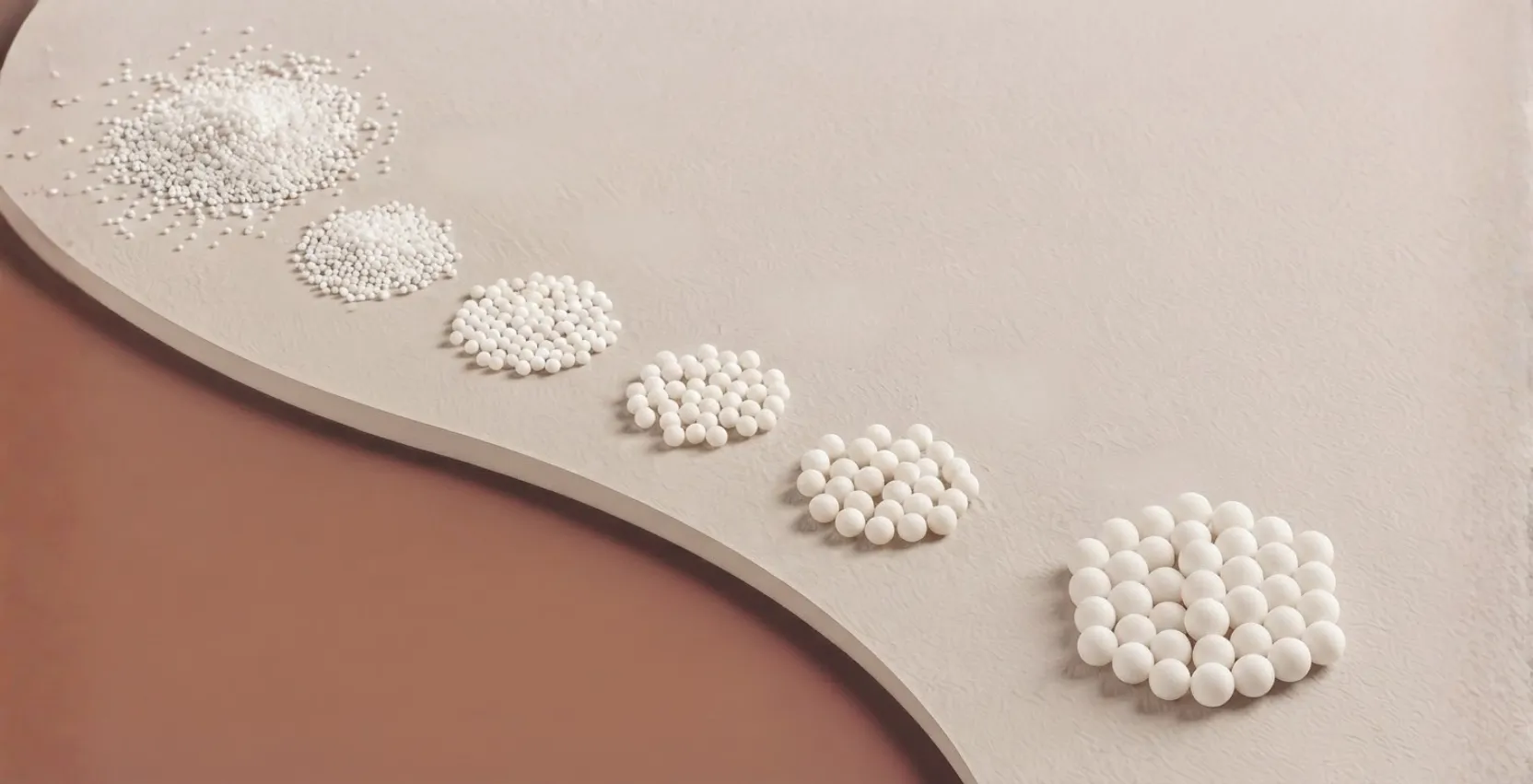
Learn how particle size influences the sensory feel, stability, exfoliation, and visual appeal of cosmetic products for superior consumer experiences.
Read More →
Aishwarya
04 June 2025
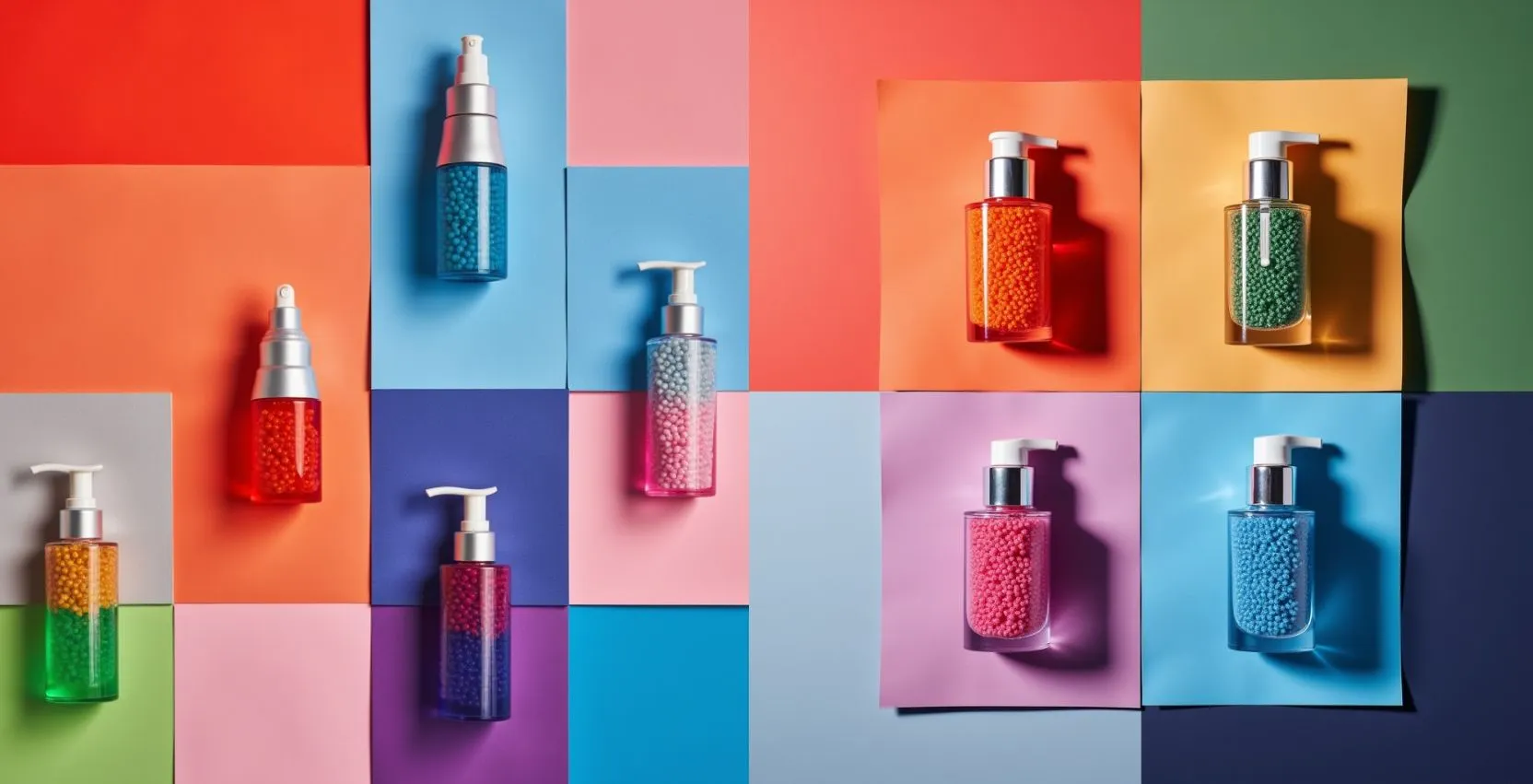
Use Sprayspheres SC for better stability and controlled release of actives in skin, hair, and body products. Increase product shelf life easily.
Read More →
Aishwarya
09 September 2026
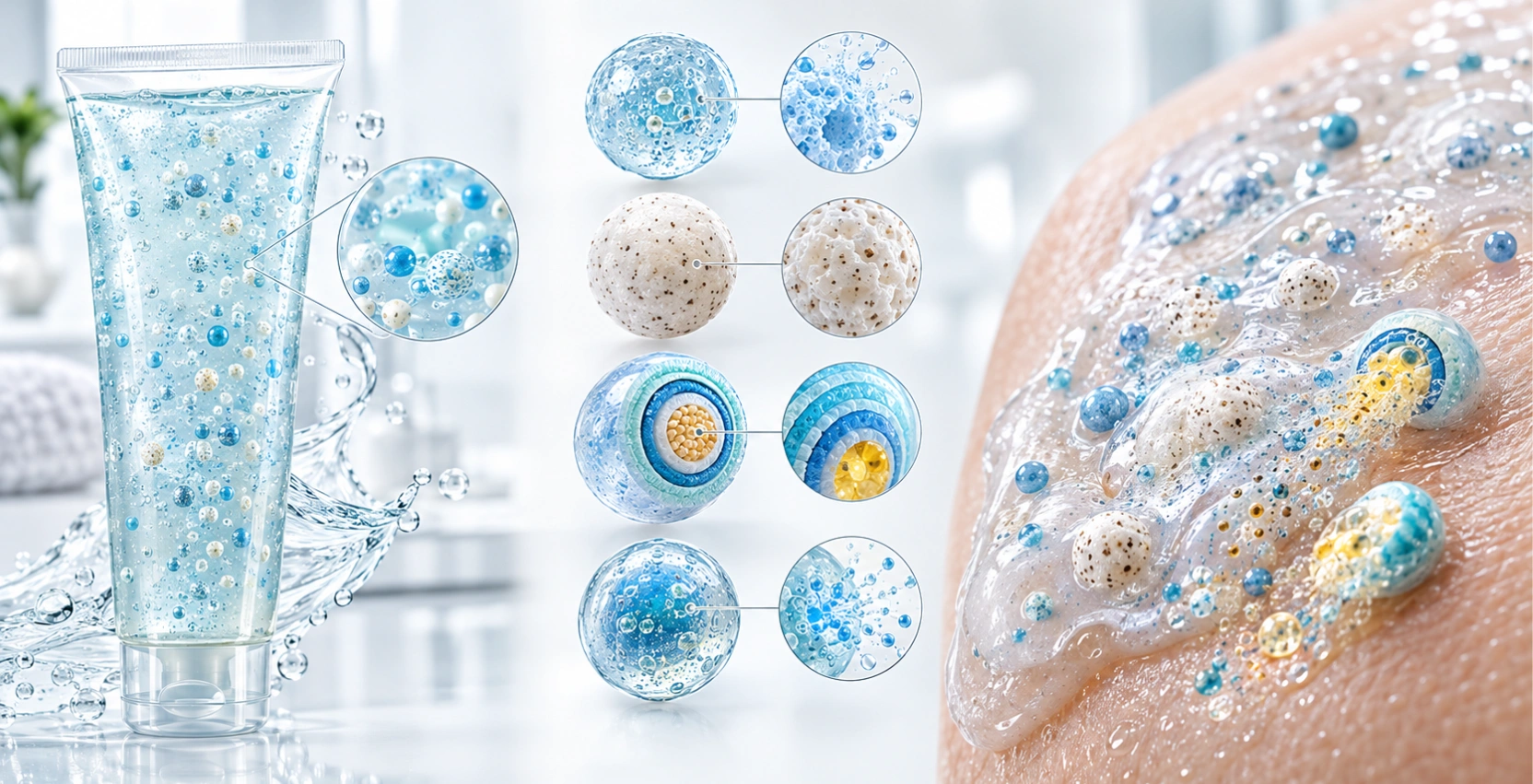
Discover how personal care particles behave from formulation to skin, including dispersion, dissolution, exfoliation, active release, and sensory effects.
Read More →
Yukta
25 September 2024
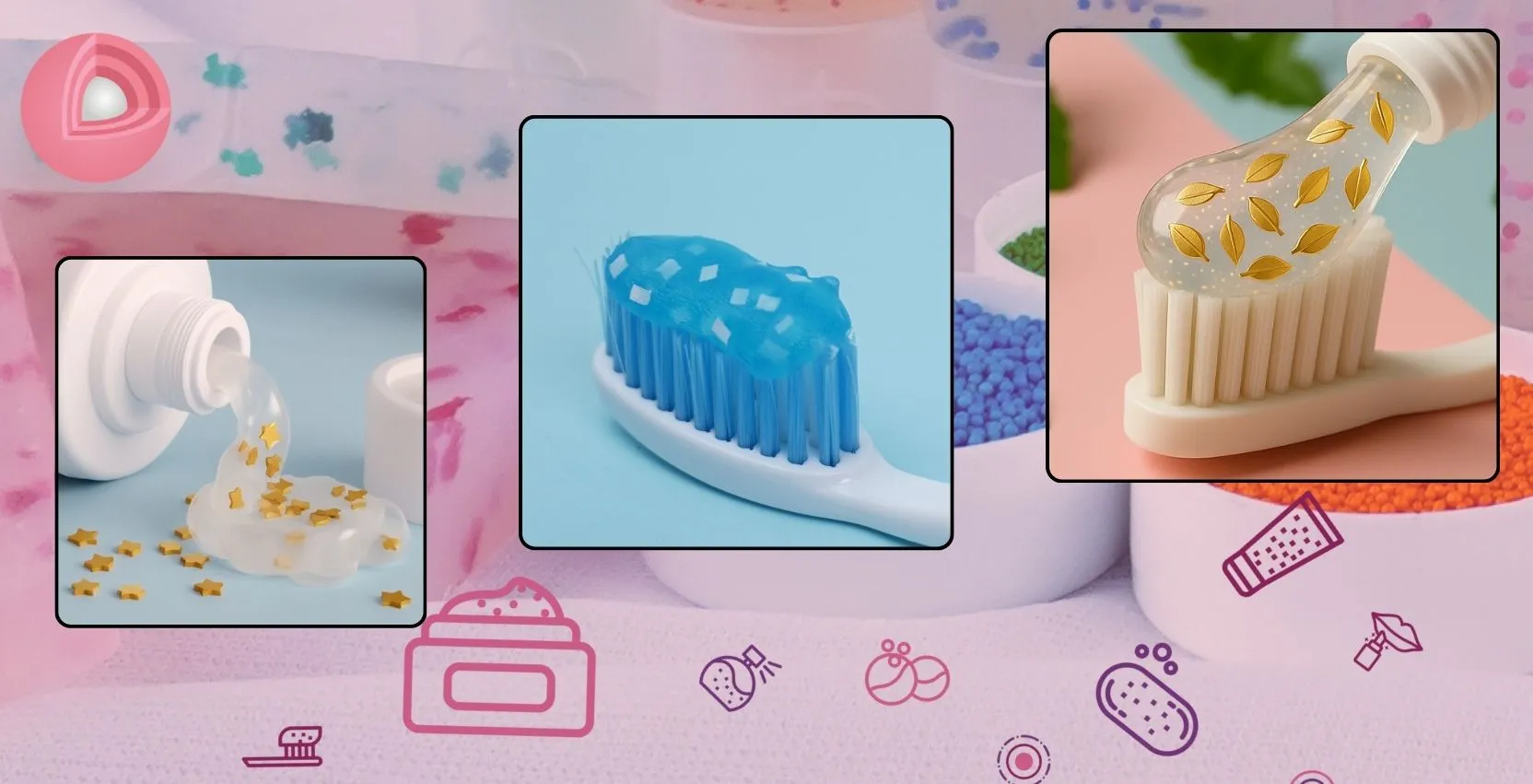
Stand out in the personal care market with Umang Global's Actifilms. Our biodegradable, customizable films add a unique touch, enhancing both aesthetics and sensory pleasure.
Read More →
Aishwarya
03 October 2026
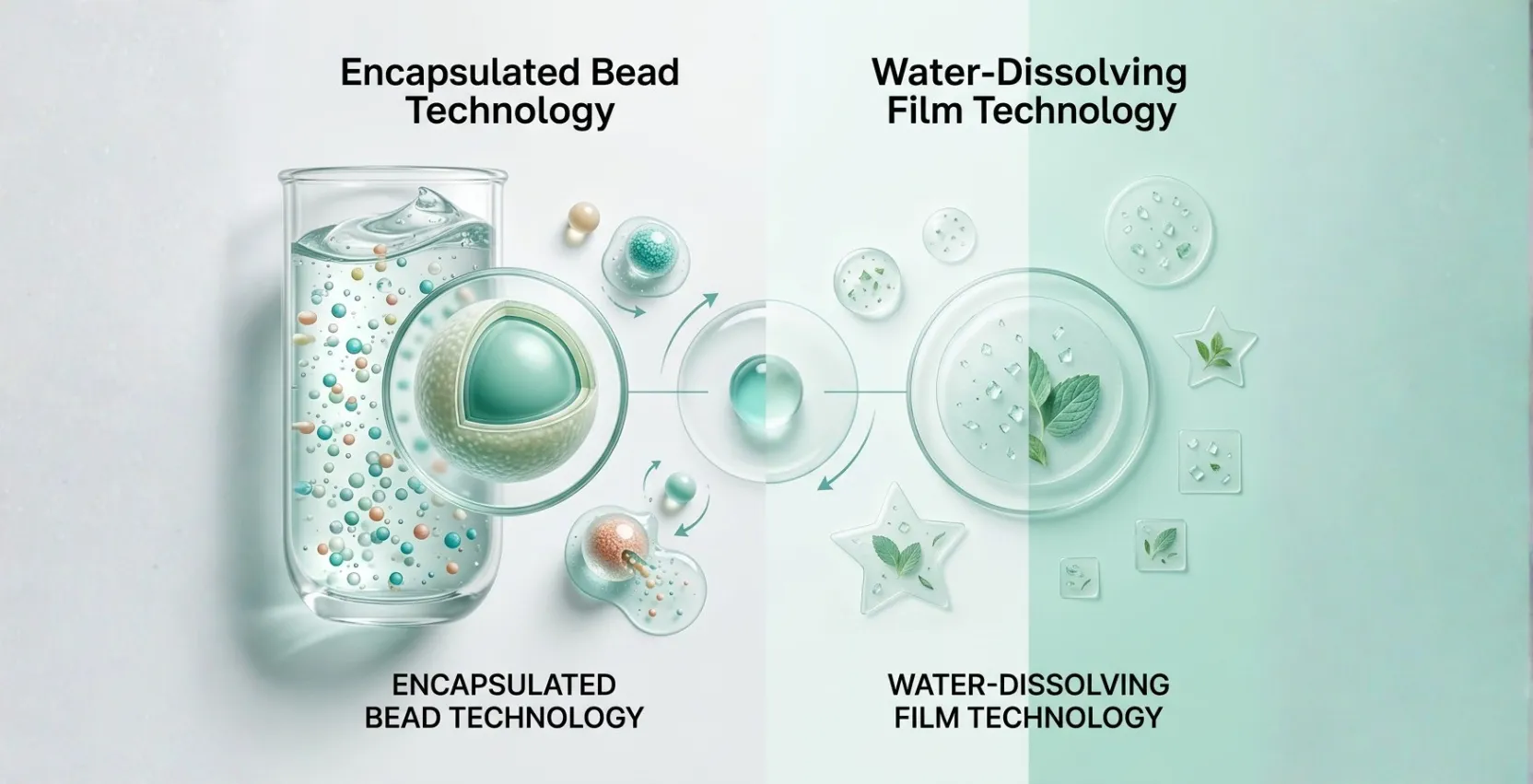
Discover how encapsulated beads and water-dissolving films can enhance oral care formulations through ingredient protection, sensory effects, and product innovation.
Read More →
Aishwarya
01 August 2026
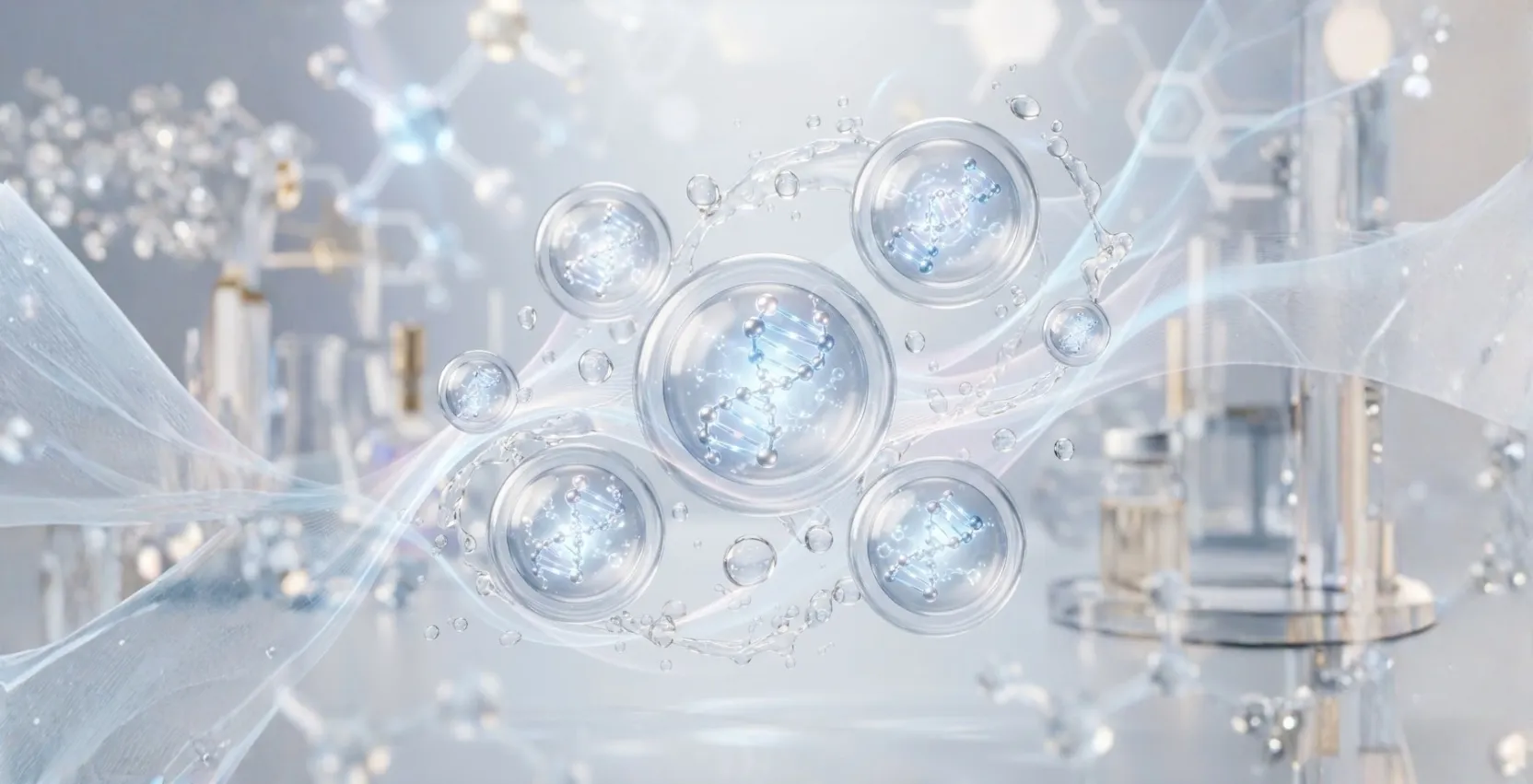
Discover why cosmetic manufacturers are adopting encapsulated peptides to improve stability, enhance product performance, and create premium skincare and haircare formulations.
Read More →

INDIA - CORPORATE OFFICE
Unit No. 1, 2nd Floor, Vicino (Mega Mall), New Link Rd, Oshiwara, Andheri West, Mumbai, Maharashtra, India. 400102
MANUFACTURING FACILITY
Unit No. 1, Survey No. 52/2, NH8, Shirsad, Vajreshwari Road, Opp. Mandvi Police Station, Village - Mandvi, Taluka- Vasai, District- Palghar 401 303, India.