Discover how encapsulated beads and water-dissolving films can enhance oral care formulations through ingredient protection, sensory effects, and product innovation.
Written By
Aishwarya
Published on
03 October 2026
Tags
Oral care is no longer confined to traditional products like toothpaste and mouthwash. Today, people want products that offer convenience, refreshment, and specific functionality in an easy-to-use package. This is driving brands and product developers to experiment with new delivery systems and oral care product development approaches.
Product innovation now spans formats ranging from oral gels and breath care products to dissolvable formats and specialized oral care formulations. Along with ingredient selection, formulation is becoming increasingly important.
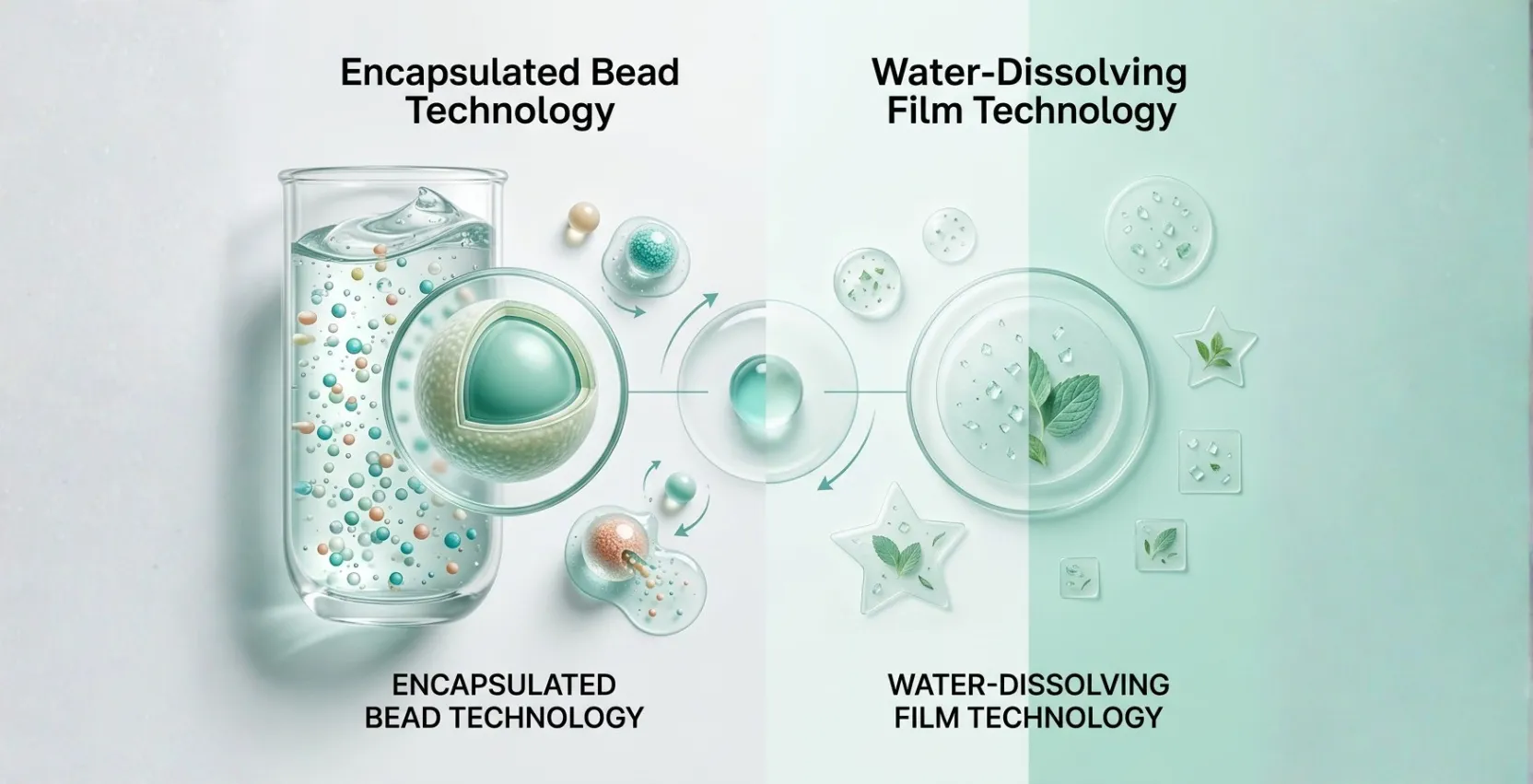
This is where innovative technologies like advanced encapsulation technology and water-dissolving films can come into play. Ingredient encapsulation can be engineered to deliver specific particle properties, protect ingredients, enhance sensorial effects, or improve delivery performance. At the same time, the film-based approach can provide a thin carrier for targeted oral-care ingredients and enhance aesthetic appeal.
As oral-care formulations evolve, delivery mechanisms play an increasingly critical role in product innovation, helping companies move beyond traditional formulations to create unique, distinct products.
Selecting an appropriate active ingredient is just one of many considerations for making an effective oral care product formulation. It should not only work effectively in the final formulation but also remain stable in storage and be user-friendly. This becomes tricky if the ingredient has an unpleasant taste or smell, is unstable under certain environmental conditions, or is incompatible with other formulation ingredients.
Taste and odor
However, some functional ingredients may have bitter, strong, or unacceptable taste and smell attributes. Managing these attributes can be critical to creating a more palatable oral care experience.
Ingredient stability
Some components may be susceptible to moisture, oxygen, light, or other conditions within the formulation. Proper delivery systems ensure they receive adequate protection.
Compatibility
An active ingredient needs to remain compatible with other components such as surfactants, humectants, flavors, sweeteners, and other functional ingredients. Encapsulation can also help manage interactions between selected ingredients.
Sensory Experience
Oral-care products are sensory in nature. Texture, mouthfeel, freshness, dissolution, and fragrance or flavor can shape the consumer experience.
Controlled Availability
Some components can be improved by protecting them within a delivery system and releasing them under certain circumstances. This gives formulators information about when the component interacts with the environment.
Convenient Delivery
Modern oral hygiene products are also looking at better packaging options. Bead technology and films can offer a different approach to incorporating ingredients into the final product.
Thus, a good oral care formulation is not just about including an effective ingredient; it is about choosing the right delivery system.
Encapsulated beads are engineered particles in which a selected oral-care ingredient is incorporated within or associated with a protective carrier system. Encapsulation is used as an alternative to directly including the active ingredient in the formula.
In oral care formulations, this technique can be used in selected ingredients that have problems with taste, smell, stability, compatibility, and dispersibility. The bead itself can act as a carrier, separating the ingredient from other formulation components until the desired time. Depending on bead construction, you can control its properties through size, composition, structure, and solubility.
Adding encapsulated beads to an oral-care product can enhance its sensory and visual appeal. The particles' presence, appearance, feel, or state changes during use can create a distinct consumer experience while delivering functionality through the encapsulated material.
It becomes more than a way to protect the ingredients. It lets the formulator consider the ingredient and the delivery system in tandem, creating oral care formulations where functionality, compatibility, aesthetics, and sensory experience are considered in one process.
The life cycle of an encapsulated bead starts when it is loaded into the oral care product and ends when it comes into contact with water, moisture, or saliva. Umang Sprayspheres SC is a dissolving carrier bead that provides a visual effect and releases the encapsulated active at the time of application. It is made from lactose and cellulose and contains active ingredients such as Vitamin C, Vitamin E, menthol, mint oil, jojoba oil, and more.
Bead incorporation
Once added to the formulation, the beads will stay suspended in the product. The bead’s size, composition, and density influence how it behaves, affect its performance in the formulation, and help determine the product's final look.
Product storage
During storage, the beads are formulated to retain their shape within the formulation. This ensures that the encapsulated ingredient stays inside the carrier till the product is put into use.
Applications
When brushing or applying, the spheres encounter water and mechanical forces. The spray spheres tend to soften when sufficiently wetted, and they may even break or dissolve during application, releasing their contents.
Contact with moisture and saliva
This is where the particle enters the user experience. Rather than staying in bead form, a dissolvable bead can dissolve during use, changing from a particle to an ingredient.
Ingredient availability
As the bead structure changes, the encapsulated ingredient is slowly released into the surrounding formulation. This process depends on bead structure, the encapsulated ingredient, particle size, and the formulation environment.
This illustrates how particle design can affect far more than ingredient delivery. The right particle can integrate delivery, protection, dispersion, aesthetics, and sensory effects into one oral care formulation. In oral care products, Umang's Sprayspheres technology therefore offers a particle that is both part of the formulation and part of the consumer experience.
Actifilms AF™ are developed using HPMC (Hydroxypropyl Methylcellulose). Unlike regular particles, thin films offer a unique way to incorporate certain substances into personal and oral care products. Films are designed to dissolve when rubbed or pressed, undergoing a unique transition during use.
In oral care products, Actifilms can deliver active components like menthol and mint oil, along with sensory effects such as a fresh taste and feeling. Umang's portfolio also features Actifilms in various shapes and colors.
Film technology also gives formulators a different way to consider ingredient protection, inclusion, functional properties, and product differentiation. Rather than incorporating the ingredient directly into the oral care formulation, formulators may include it in an engineered film tailored to the application.
It is therefore especially relevant for developing oral care products that require functionality, convenience, aesthetics, and sensuality to go hand in hand. It complements encapsulated bead technology by providing an alternative delivery mechanism based on film technology.
Encapsulated beads and water-dissolving films offer two distinct ways to deliver active ingredients in oral care products. Particle engineering is used for beads, while films use thin-film technology. The choice of method depends on several factors.
With encapsulated particles like Sprayspheres SC (dissolving beads), the particle itself can become an integral part of the product experience. The particle can provide visual and sensory stimulation, while its dissolvability helps release the encapsulated ingredient during use.
Actifilms AF™ (water-dissolving films) is one such product, offering an alternative solution through its film-based system. HPMC films can be manufactured in various shapes such as circles, stars, squares, hearts, flowers, etc and colors, and can even contain ingredients of choice.
Rather than assuming one technology is superior, choose the one that best complements the formulation and creates the optimal sensory experience for the consumer. Beads are ideal when particle transformation, visual interaction, or dissolution behavior is significant.
Together, these innovations show how encapsulation and particle/film engineering can extend the capabilities of oral care formulations, allowing brands to move beyond traditional delivery methods and create more unique formulations.
Encapsulated beads and functional films could be used in various oral care formulations. The application depends on the product and the ingredient used. In other words, these techniques will complement the standard ingredients rather than replace them. Umang Global Group includes oral-care products in its personal care line.
Toothpastes and Tooth Gels
You can formulate encapsulated beads in toothpaste or tooth gel preparations to provide visual effects by controlled inclusion of certain materials, such as flavors and oils. This depends on particle size and composition, which can vary by intended formulation.
Mouthwash Formulations
Encapsulation in liquid oral care products allows you to incorporate ingredients with special properties. This is especially important for ingredients like flavorings and oils.
Oral Care Gels
The bead system can bring a new visual and tactile experience to gel products by encapsulating selected ingredients. This way, the particle can become an active ingredient in product differentiation, rather than a mere formulation constituent.
Breath-care Products
Encapsulated flavors and aromatic compounds can be investigated in breath care products, where the delivery method is a key factor.
Dissolvable Oral Care Products
Alternatively, Actifilms AF™ can be used to formulate novel film-based oral care products. This is because their film composition enables certain ingredients to be formulated in a unique visual form, rather than in conventional formulations like liquids and gels.
Specialized Oral Care Products
Beyond traditional forms, these technologies may enable differentiated oral care products, where delivery form, aesthetics, ingredient incorporation, and user experience are key factors. These technologies may be tailored to the drug formulation and not tied to one conventional form.
Overall, this approach isn't limited to incorporating beads or films into oral-care products; it uses encapsulation to deliver targeted functions for specific ingredients.
At Umang Particle Science, we develop oral care formulations using personalized encapsulation and particle-engineering techniques, enabling ingredients to take forms that fit different product needs. Instead of using an ingredient in its traditional powder or liquid form, you can formulate it using a particle-based system, such as encapsulated beads, beadlets, spheres, granules, and other custom-designed particles. You can use this concept with ingredients like activated charcoal, flavors, cooling agents, botanicals, and other formulation ingredients.
A major feature is encapsulating ingredients with controlled particle size. Based on application requirements, particles can be developed with varied physical properties to suit products like toothpaste, tooth gel, oral care gels, clear gels, and other personal care products. For instance, activated charcoal could be developed in different particle forms, such as activated charcoal beadlets, activated charcoal spheres, activated charcoal granules, or activated charcoal beads, based on the requirements of the formulation and end product. Similarly, this approach could be considered for other applications of activated charcoal, like encapsulated beads for gels, toothpaste, face wash, shampoo, and shower gel.
In addition to particle systems, Actifilms AF™ (water-dissolving cooling crystals) uses film technology to deliver ingredients. The method uses HPMC and Sodium CMC film technology to develop thin, flexible films that can include the desired ingredients. Depending on the intended application, these films can be water-soluble, HPMC, cellulosic, or hydroxypropyl methylcellulose.
Using films in the process can be especially helpful for developing distinct oral care formulations. For products like toothpaste, consider films containing cooling agents such as menthol, peppermint, spearmint, and mint. You can formulate water-soluble oral care films, as well as distinct HPMC-based formulations, to avoid using particles, gels, and liquids.
Formulation development is not limited to a standardized particle or film system. Umang Particle Science can work around raw-material and final-product limitations through encapsulation, particle-size control, dissolution, film composition, and application-specific performance. Whether encapsulated particles for an oral care gel or customized HPMC films for toothpaste formulations, the delivery format can be tailored to the application.
With customized encapsulated beads, particle engineering, and Actifilms AF™, Umang Particle Science offers several ways for companies to formulate distinctive oral-care products. With a technology-based focus on applications, the formulation process itself becomes an opportunity to create an entirely new range of options for functionality, aesthetics, and sensory experience.
It is not just the discovery of new ingredients but also their delivery method that constitutes innovation in oral care products. The delivery method can affect an ingredient's performance, stability, convenience of use, sensorial effect, and product differentiation.
As oral-care products continue to evolve, Umang Particle Science helps achieve this by providing custom-made solutions through bead and film encapsulation.
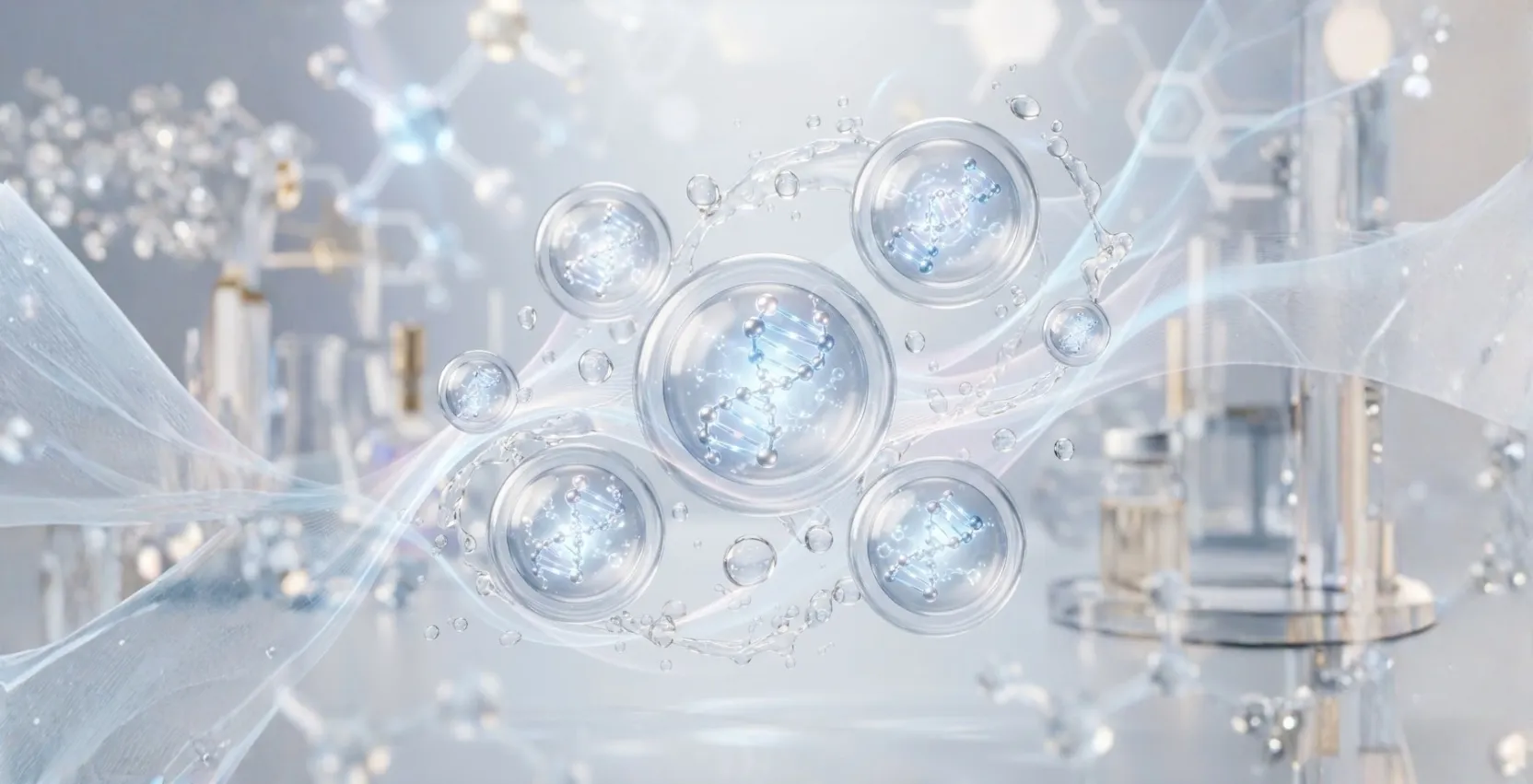
Aishwarya
01 August 2026
Discover why cosmetic manufacturers are adopting encapsulated peptides to improve stability, enhance product performance, and create premium skincare and haircare formulations.
Read More →
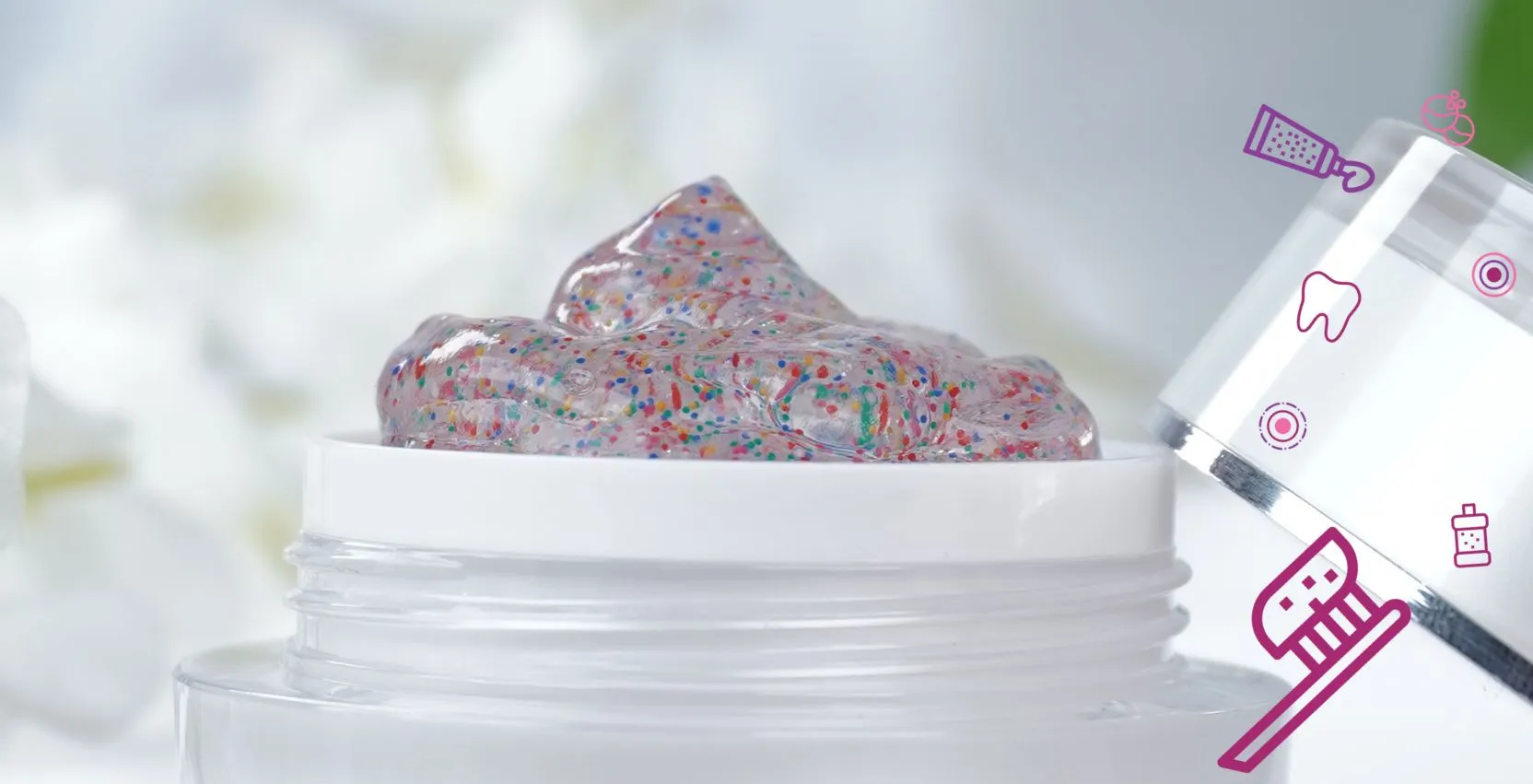
Omkar
21 September 2024
Experience the advantages of colored beads and natural exfoliants in personal care products. Improve skin texture, product attractiveness, and sustainability now!
Read More →
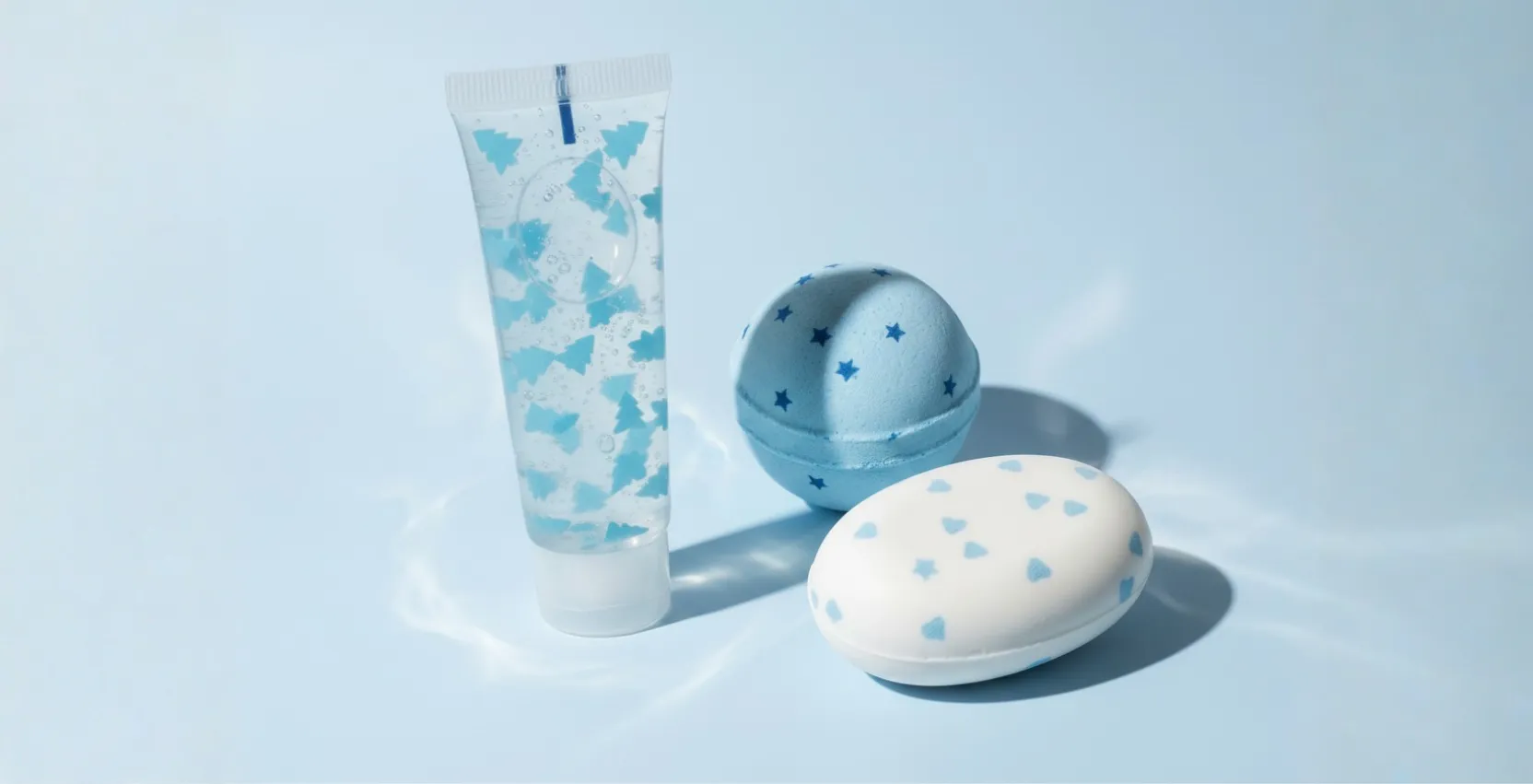
Aishwarya
03 September 2026
Discover five reasons HPMC films are gaining attention in personal care, from sustainability and customization to premium appeal and versatile cosmetic applications.
Read More →
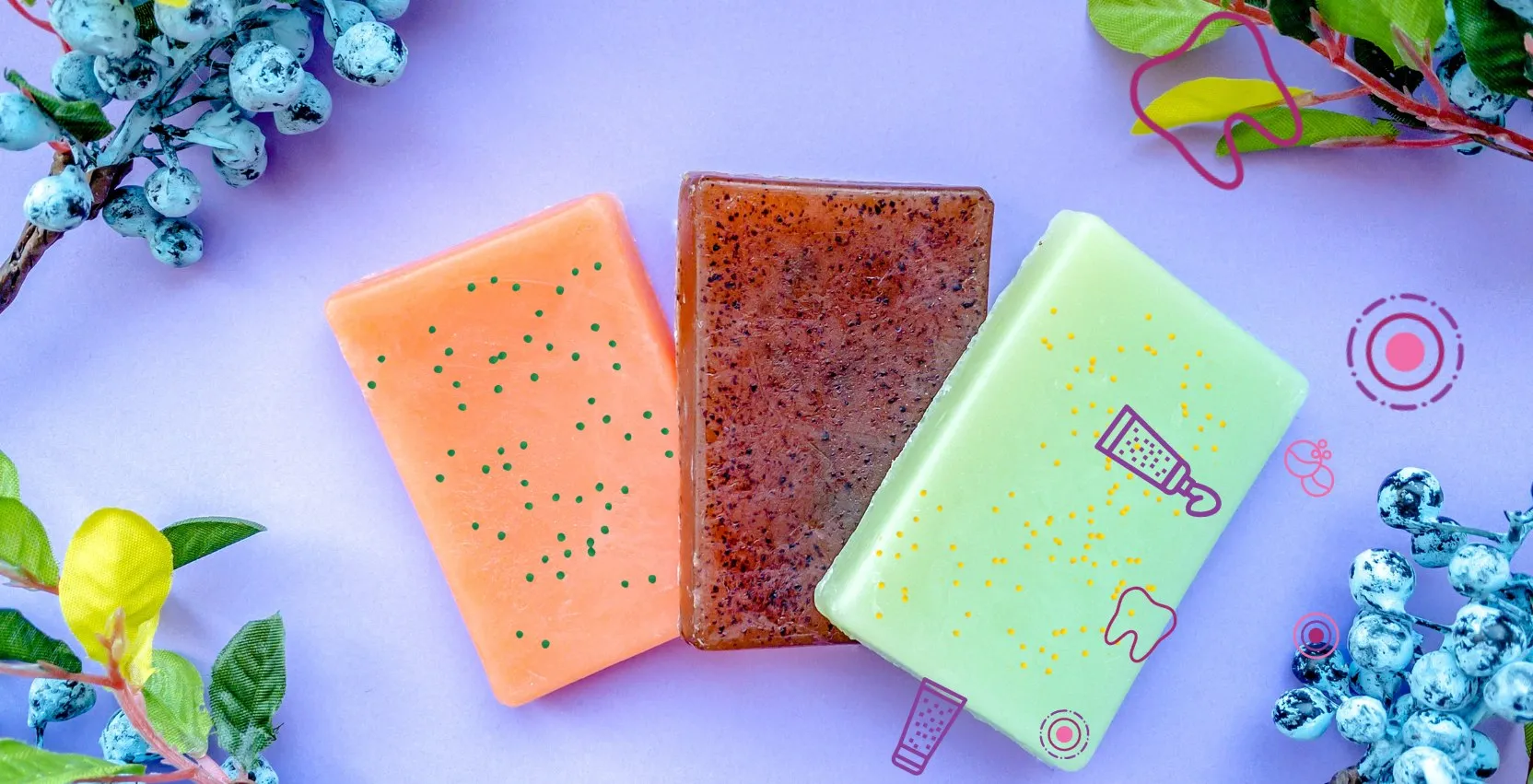
Neel
25 September 2024
Explore our eco-friendly, biodegradable exfoliators. Made with natural ingredients, our SpraySphere SE Beads and 100% Natural Exfoliator support skin health and the planet.
Read More →
Aishwarya
03 October 2026
Discover how encapsulated beads and water-dissolving films can enhance oral care formulations through ingredient protection, sensory effects, and product innovation.
Read More →
Devendra
25 September 2024
Develop how encapsulation enhances the efficacy of active ingredients in skincare. Learn about improved absorption, stability, and the sensory experience of products.
Read More →

INDIA - CORPORATE OFFICE
Unit No. 1, 2nd Floor, Vicino (Mega Mall), New Link Rd, Oshiwara, Andheri West, Mumbai, Maharashtra, India. 400102
MANUFACTURING FACILITY
Unit No. 1, Survey No. 52/2, NH8, Shirsad, Vajreshwari Road, Opp. Mandvi Police Station, Village - Mandvi, Taluka- Vasai, District- Palghar 401 303, India.