Learn how burst-on-application particles dissolve, disperse or break with water, rubbing or pressure, and how particle design shapes personal care products.
Written By
Aishwarya
Published on
19 November 2026
Tags
The oral care industry is gradually moving towards more advanced product formats that combine functionality, convenience, and an improved user experience. Traditional products such as toothpaste and mouthwash continue to be widely used, but changing consumer expectations are encouraging manufacturers to explore alternative formulation techniques and ingredient delivery systems.
Today's product development landscape includes a broader range of solutions, including specialized oral gels, breath freshening products, dissolvable films, and formulations containing engineered particles. These developments are creating new opportunities for brands to differentiate their products through formulation design and ingredient presentation.
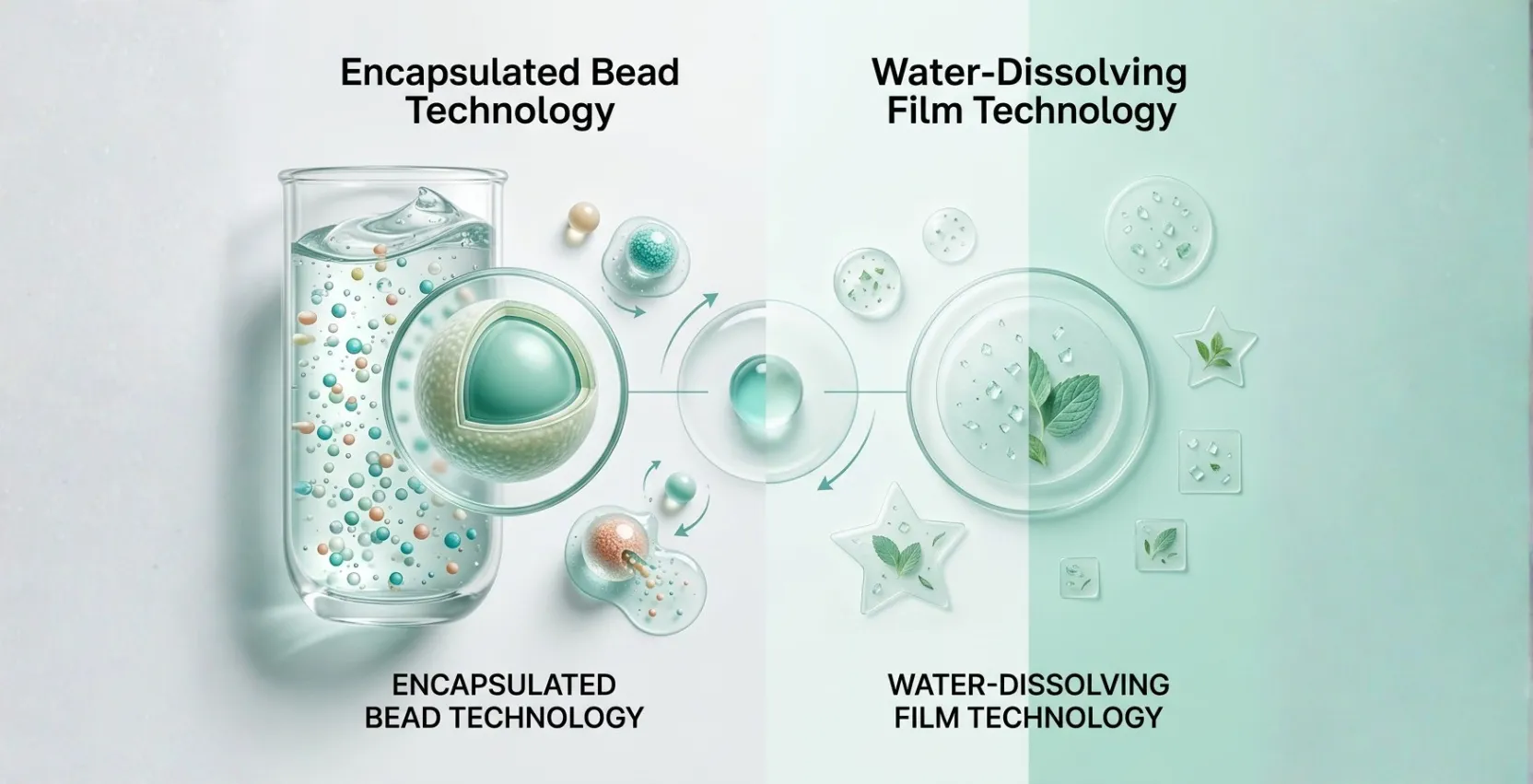
Two technologies gaining attention in this area are ingredient encapsulation and water-soluble film systems. Encapsulation allows selected ingredients to be incorporated into specially designed particles with specific characteristics, including controlled particle dimensions, improved protection, and customized dissolution behaviour. Film-based delivery systems, on the other hand, provide a thin carrier structure for incorporating selected functional ingredients into innovative product formats.
These technologies give formulators greater flexibility when developing products with specific sensory, visual, and functional characteristics. As a result, innovation in oral care is increasingly focused not only on the ingredients used but also on how those ingredients are incorporated and experienced during product application.
Developing an effective oral care product requires more than identifying ingredients with desirable functional properties. Each component must perform appropriately within the formulation while maintaining its characteristics throughout manufacturing, storage, and application.
Several formulation challenges need to be addressed when working with specialized oral care ingredients.
Managing flavour and odour characteristics
Some functional ingredients, including botanical extracts, cooling agents, and specialized compounds, may have intense or unpleasant taste and odour profiles. Incorporating these materials without negatively affecting the overall sensory experience can be challenging. Suitable delivery systems can help formulators manage how these ingredients interact with the surrounding formulation.
Protecting sensitive ingredients
Exposure to moisture, oxygen, light, and other environmental conditions can influence the stability of certain formulation components. Depending on the ingredient, an appropriate encapsulation system may provide a protective barrier and help maintain its characteristics during product storage.
Maintaining formulation compatibility
Oral care formulations commonly contain multiple ingredients, including surfactants, humectants, sweeteners, flavouring agents, and other functional materials. Interactions between these components may affect product stability or performance. Encapsulation offers an additional formulation option by physically separating selected ingredients from other components when required.
Creating the desired sensory properties
Consumer acceptance of oral hygiene products is strongly influenced by their taste, texture, mouthfeel, freshness, and appearance. Particle-based and film-based technologies provide alternative ways to introduce visual and tactile characteristics into conventional formulations.
Managing ingredient release
Certain applications benefit from incorporating ingredients into a carrier system rather than distributing them directly throughout the formulation. Depending on the carrier composition and structure, the ingredient may become available when exposed to specific application conditions, such as moisture or mechanical action.
Introducing alternative product formats
Packaging and product presentation are also important considerations in oral care innovation. Dissolving beads and thin-film systems provide manufacturers with additional options for developing distinctive formulations and incorporating functional ingredients.
Therefore, successful oral care product development involves selecting an appropriate combination of ingredients, carrier materials, and delivery technologies rather than relying exclusively on the functional properties of individual ingredients.
Encapsulated beads are specially engineered particles designed to incorporate selected ingredients within or alongside a carrier material. Instead of adding every functional component directly to the main formulation, manufacturers can use these particles as an alternative method of ingredient incorporation.
In oral care applications, encapsulation can be explored for ingredients that present challenges related to flavour, odour, stability, compatibility, or dispersion. The carrier structure can help separate the selected ingredient from the surrounding formulation, depending on the encapsulation design.
The physical characteristics of these particles can be customized according to application requirements. Particle size, composition, structure, and dissolution behaviour are important considerations when developing an encapsulated ingredient for a particular oral care product.
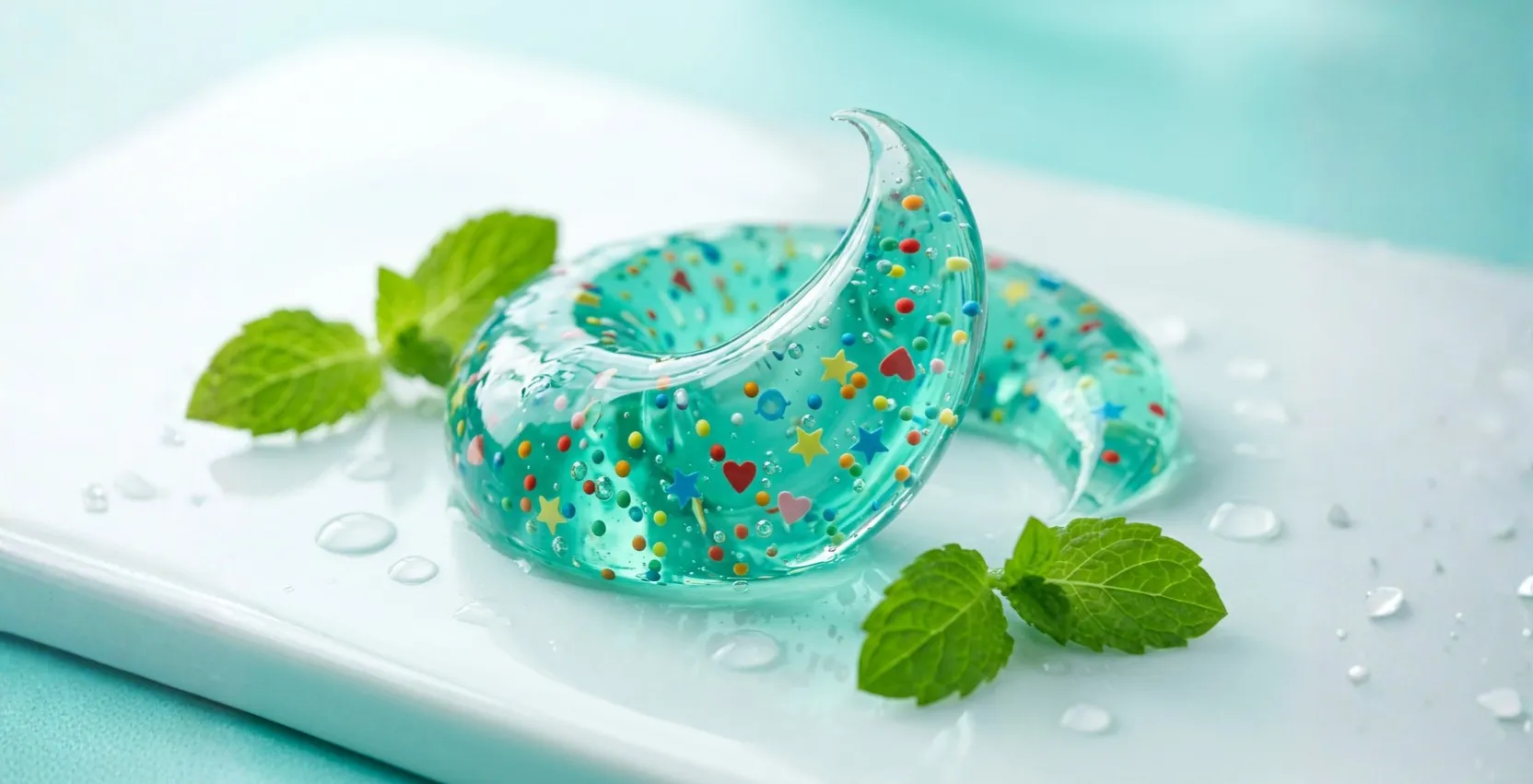
Beyond their functional role, encapsulated beads can also contribute to the appearance and sensory characteristics of the finished product. Their colour, shape, texture, and behaviour during application can introduce a distinctive visual element into toothpaste, oral gels, and other formulations.
For product developers, this creates an opportunity to combine ingredient incorporation with product differentiation. The carrier particle becomes an important part of the formulation design, allowing functionality, appearance, and consumer experience to be considered together.
The performance of a dissolving bead depends on its composition, physical structure, and interaction with the surrounding formulation. From the time it is incorporated into an oral care product until it encounters moisture during application, the particle must maintain characteristics suitable for its intended purpose.
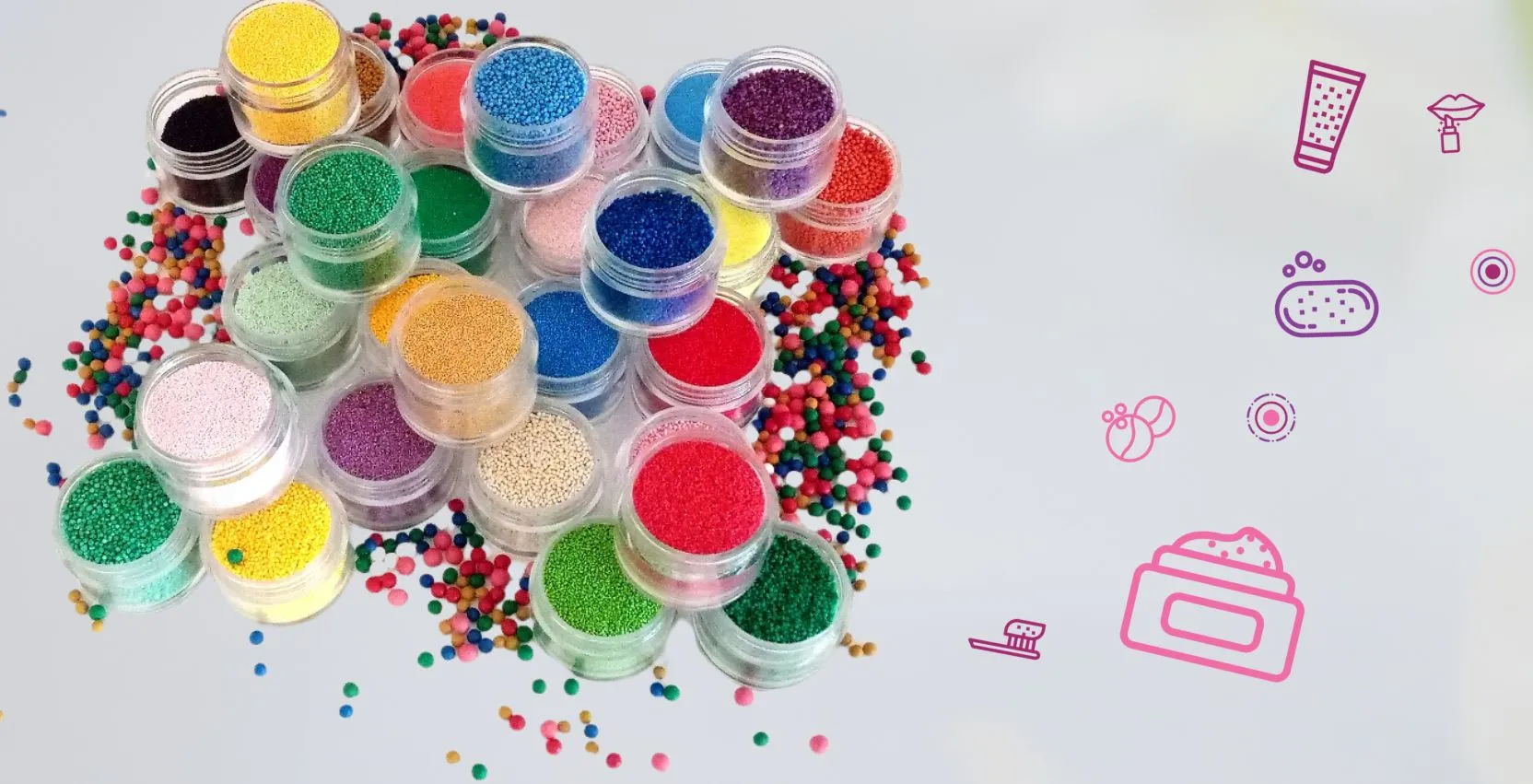
Umang Sprayspheres SC is a dissolving carrier bead designed to provide a visual effect while releasing encapsulated ingredients during application. These beads are made using lactose and cellulose and can incorporate ingredients such as Vitamin C, Vitamin E, menthol, mint oil, jojoba oil, and other selected materials.
Incorporation into the formulation
During product manufacturing, the beads are introduced into the selected oral care base. Their dimensions, density, and composition influence their distribution and behaviour within the formulation. These characteristics also contribute to the appearance and physical properties of the finished product.
Behaviour during product storage
A suitable bead formulation is designed to retain its intended structure while incorporated into the finished product. Maintaining particle integrity during storage is important for keeping the encapsulated material within the carrier until the product is used.
Interaction during application
When the oral care product is applied, the particles may experience moisture, friction, and mechanical pressure. These conditions can cause dissolving beads to soften, break down, or dissolve, depending on their composition and structural properties.
Exposure to water and saliva
Moisture plays an important role in the behaviour of water-responsive carrier particles. During brushing or other application processes, contact with water and saliva can initiate changes in the bead structure and contribute to its dissolution.
Release of encapsulated ingredients
As the carrier material dissolves or breaks down, the incorporated ingredients become available within the surrounding formulation. The release behaviour depends on several factors, including particle dimensions, carrier composition, ingredient characteristics, and the conditions experienced during application.
This makes dissolving beads more than just an alternative ingredient carrier. Through appropriate particle engineering, they can combine ingredient incorporation, visual appeal, dissolution characteristics, and sensory effects within a single oral care formulation. Umang's Sprayspheres SC technology provides manufacturers with an additional option for developing such particle-based products.
Another approach to developing innovative oral care products involves the use of thin, water-dissolving films. Umang's Actifilms AF™ technology uses HPMC (Hydroxypropyl Methylcellulose) to create film-based formats that can incorporate selected functional ingredients.
Unlike conventional encapsulated particles, films provide a flat and flexible carrier structure. They can be designed to dissolve when exposed to suitable conditions during application, offering an alternative way to introduce functional materials into personal care and oral care formulations.
For oral care applications, Actifilms can incorporate ingredients such as menthol and mint oil, which are commonly associated with cooling and refreshing sensory experiences. The technology also allows films to be developed in different shapes, colours, and designs according to product requirements.
Film-based systems provide formulation flexibility by allowing selected ingredients to be incorporated into a separate carrier rather than being added directly to the main product base. This approach can be explored when developing products that require distinctive ingredient presentation, customized physical formats, or alternative delivery mechanisms.
Actifilms AF™ therefore complements encapsulated bead technology by introducing a film-based option for oral care product development. Both approaches offer different ways to incorporate ingredients while creating opportunities for improved product differentiation and consumer experience.
Encapsulated beads and water-dissolving films represent two different approaches to ingredient delivery in modern oral care formulations. Although both technologies can be used to incorporate selected ingredients, their physical structures and behaviour during application differ.
Encapsulated beads are developed through particle engineering. Their size, composition, and structure can be adjusted according to the requirements of the formulation. Products such as Sprayspheres SC use dissolving carrier particles that can provide a visible presence within the product before changing their structure during application.
Film-based technology follows a different development process. Actifilms AF™ uses HPMC-based film structures that can incorporate selected ingredients and be produced in different shapes and colours. Available designs may include circles, stars, squares, hearts, flowers, and other customized forms.
The choice between these technologies depends on the intended application and the characteristics required in the finished product.
Bead-based systems may be suitable when particle appearance, tactile interaction, or dissolution behaviour is an important part of the formulation concept. Film technology may be more appropriate when a thin, customized carrier format is preferred.
Neither approach is universally better than the other. Their suitability depends on ingredient compatibility, product composition, processing conditions, and the desired consumer experience.
By combining particle engineering with film technology, manufacturers can explore different product concepts and move beyond conventional ingredient incorporation methods. These options create additional opportunities for developing differentiated oral care products.
Advanced encapsulation and dissolving film systems can be explored across several oral care product categories. The suitability of each technology depends on the ingredients being incorporated, the formulation base, and the intended functionality of the finished product. These systems are designed to complement conventional formulation ingredients rather than automatically replace them.
Toothpaste and tooth gels
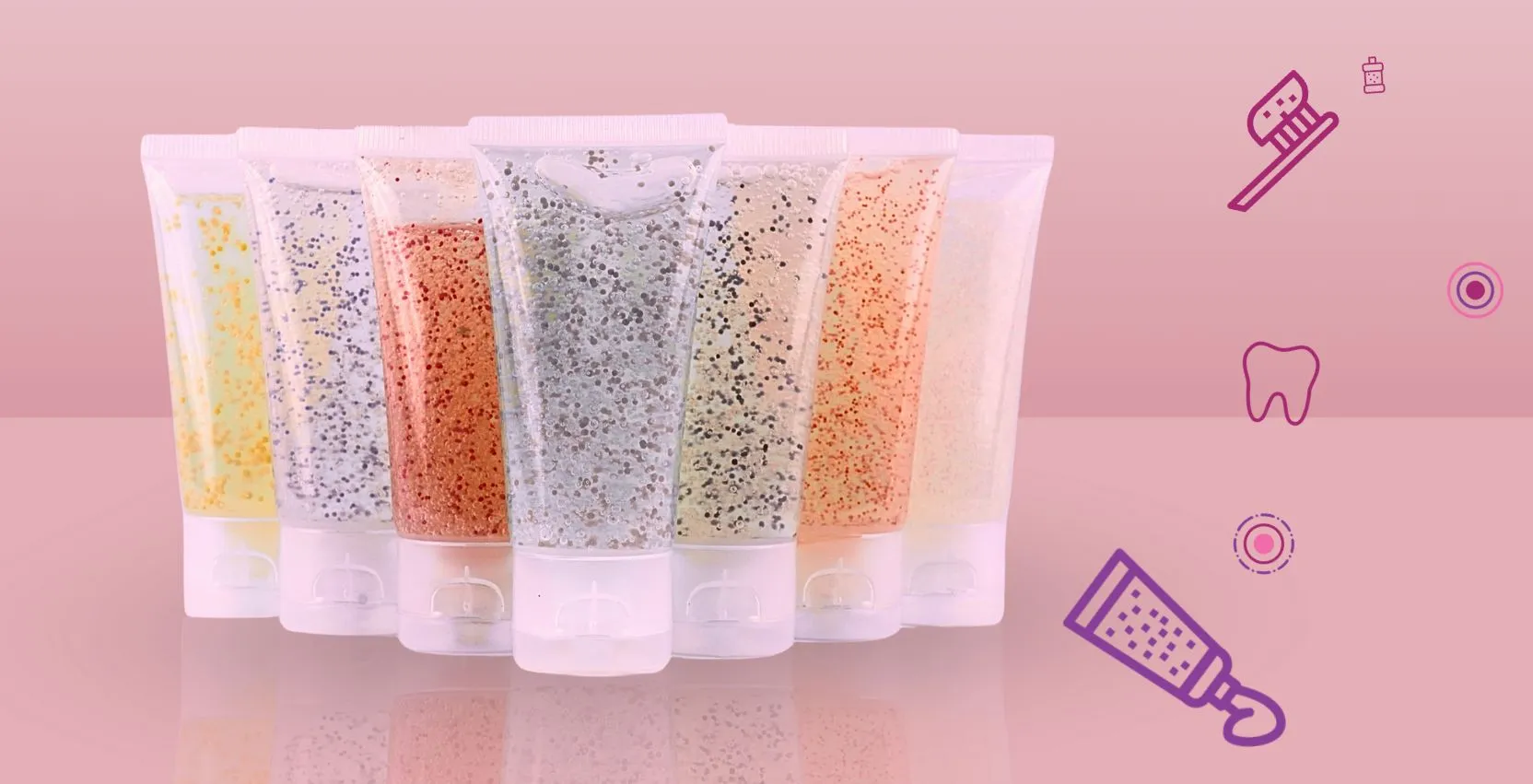
Encapsulated beads can be incorporated into selected toothpaste and tooth gel formulations to introduce visual elements and alternative ingredient delivery formats. Flavours, oils, and other compatible materials may be considered for encapsulation depending on particle composition, size, and formulation requirements.
Mouthwash formulations
Liquid oral care products can offer opportunities to explore specialized carrier systems for incorporating selected ingredients. Encapsulation may be investigated for flavouring materials and oils where their compatibility and distribution within the liquid formulation need to be considered.
Oral care gels
Particle-based technology can add a distinctive appearance and tactile characteristic to oral gel formulations. Encapsulated ingredients can be incorporated as visible particles, making the carrier system part of the product's overall presentation and differentiation.
Breath freshening products
Flavouring compounds, mint oils, and aromatic ingredients can be evaluated for incorporation into specialized carrier systems. The selection of an appropriate delivery format depends on the required sensory characteristics and the intended use of the product.
Dissolvable oral care formats
Actifilms AF™ provides an alternative approach for developing film-based oral care products. Its HPMC film structure allows selected ingredients to be incorporated into thin, customized formats rather than relying exclusively on conventional liquid or gel systems.
Customized oral care formulations
Beyond established product categories, particle and film technologies can support the development of specialized oral care concepts. These may involve customized ingredient combinations, distinctive shapes, visual characteristics, or alternative methods of incorporating functional materials.
Overall, the application of encapsulation and film technology depends on matching the carrier system to the ingredient and final formulation. This allows product developers to explore new possibilities in functionality, aesthetics, and ingredient presentation.
Umang Particle Science focuses on developing customized ingredient delivery solutions through encapsulation, particle engineering, and film technology. These approaches allow manufacturers to explore alternative physical formats for incorporating functional ingredients into personal care and oral care products.
Instead of limiting ingredient incorporation to conventional powders and liquids, selected materials can be developed into engineered formats such as encapsulated beads, beadlets, spheres, granules, and customized particles. Depending on the application, these systems can be explored with ingredients such as activated charcoal, flavours, cooling agents, botanical materials, and other formulation components.
Customized particle development and encapsulation
Particle size and composition are important considerations when developing encapsulated ingredients. Umang works with customized particle specifications to address the requirements of different product bases, including toothpaste, tooth gels, oral care gels, clear gels, and other personal care formulations.
For example, activated charcoal can be developed in different physical formats, including activated charcoal beadlets, activated charcoal spheres, activated charcoal granules, and activated charcoal beads. The appropriate format can be selected according to the intended formulation and application.
Similar particle-based approaches can also be explored for incorporating activated charcoal into products such as gels, toothpaste, face wash, shampoo, and shower gel. The final particle design depends on the compatibility and performance requirements of the selected product base.
Actifilms AF™ and water-dissolving film technology
Alongside particle-based solutions, Umang offers Actifilms AF™, a film-based technology developed for incorporating selected ingredients into thin carrier structures. The technology uses HPMC and Sodium CMC film systems to create customized formats suitable for different application requirements.
Depending on the selected composition, films can be developed using water-soluble and cellulosic materials. Their physical characteristics, ingredient incorporation, and dissolution behaviour can be considered during formulation development.
For oral care applications, film formulations containing cooling ingredients such as menthol, peppermint, spearmint, and mint can be explored. These materials provide opportunities to develop customized oral care films with distinctive visual and sensory characteristics.
Application-oriented formulation development
Umang's development approach is not restricted to a single standardized particle or film format. Formulation requirements can be addressed through adjustments to particle composition, size, dissolution behaviour, film structure, and ingredient selection.
Whether the requirement involves encapsulated particles for oral care gels or customized HPMC films for toothpaste formulations, the delivery format can be evaluated according to the characteristics of the raw materials and the intended finished product.
By bringing together customized encapsulation, engineered particles, and Actifilms AF™, Umang Particle Science provides manufacturers with different approaches to oral care product development. These technologies create opportunities to explore new combinations of ingredient functionality, product appearance, and sensory experience.
The development of new oral care products is no longer limited to discovering or selecting functional ingredients. How those ingredients are incorporated into a formulation can also influence product stability, compatibility, appearance, convenience, and the overall application experience.
Encapsulated beads and water-dissolving films offer manufacturers additional options for approaching these formulation challenges. Through particle engineering and film-based delivery systems, selected ingredients can be incorporated into customized formats that support different product concepts.
Umang Particle Science contributes to this evolving area through its Sprayspheres SC dissolving bead technology and Actifilms AF™ film solutions. These technologies provide formulation possibilities for brands looking to explore distinctive oral care products through customized ingredient delivery.
Ultimately, the future of oral care formulation will involve not only what goes into a product but also how ingredients are structured, protected, presented, and experienced during use.
Aishwarya
06 November 2026
Explore how encapsulated beads and water-dissolving HPMC films improve taste masking, stability and sensory appeal in toothpaste, gels, mouthwash and more.
Read More →
Sahil
25 September 2024
Find out why encapsulated retinol is revolutionizing anti-aging skincare. Learn about its enhanced absorption, stability, and reduced irritation for youthful skin.
Read More →
Aishwarya
03 October 2026
Discover how encapsulated beads and water-dissolving films can enhance oral care formulations through ingredient protection, sensory effects, and product innovation.
Read More →
Devendra
25 September 2024
Develop how encapsulation enhances the efficacy of active ingredients in skincare. Learn about improved absorption, stability, and the sensory experience of products.
Read More →
Aishwarya
10 October 2026
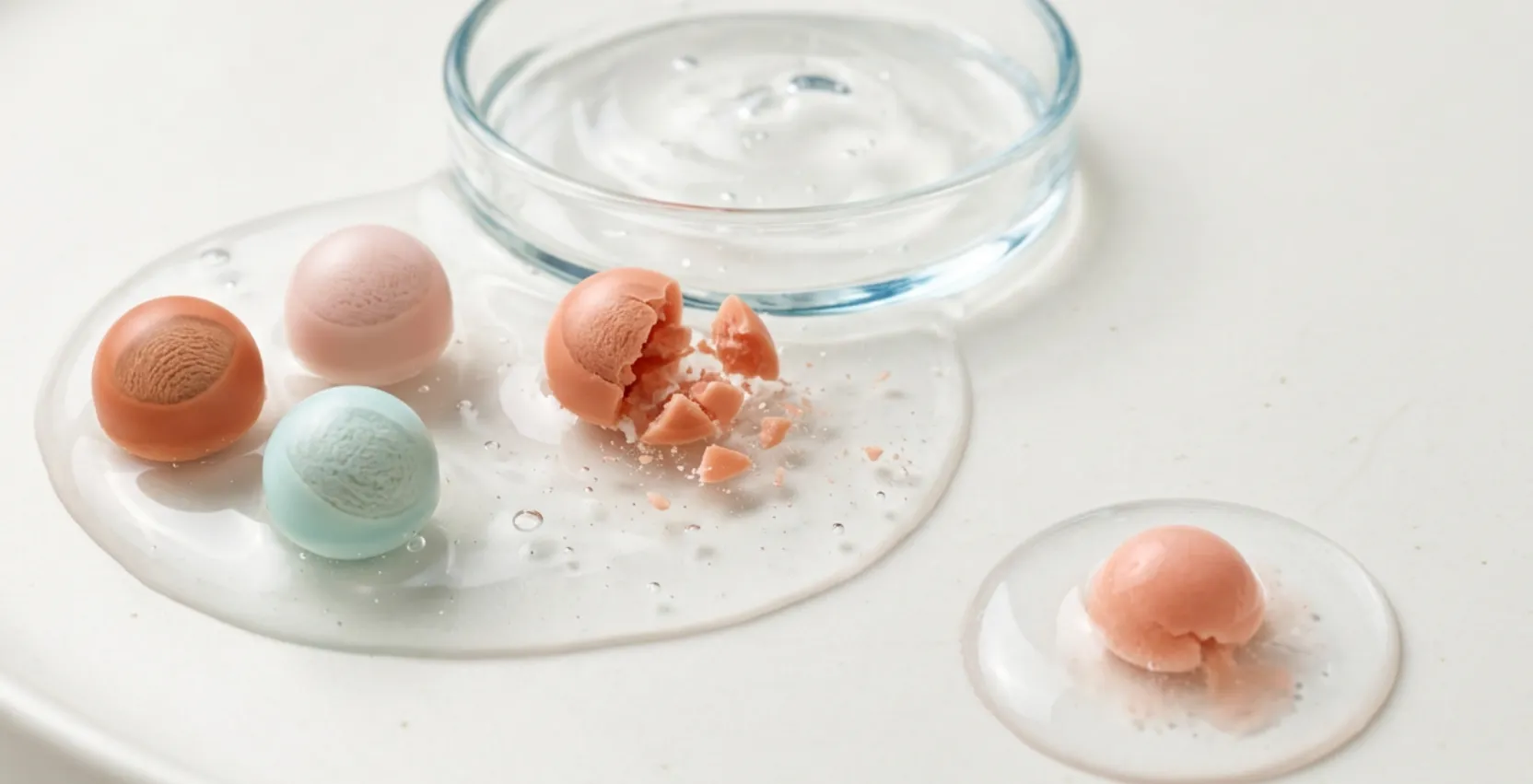
Discover how burst-on-application technology uses encapsulation and particle engineering to create innovative personal care formulations with tailored sensory experiences.
Read More →
Aishwarya
04 June 2025
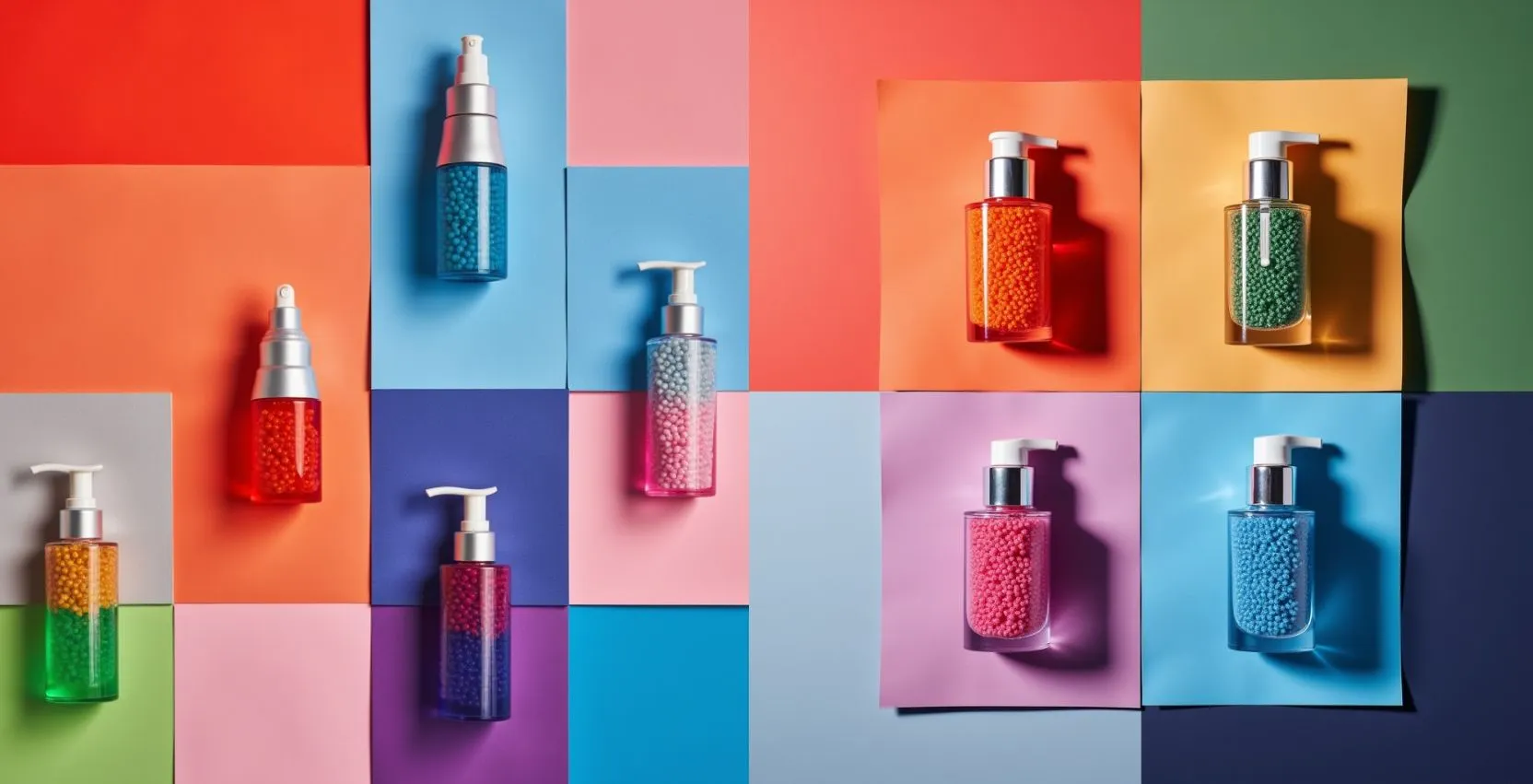
Use Sprayspheres SC for better stability and controlled release of actives in skin, hair, and body products. Increase product shelf life easily.
Read More →

INDIA - CORPORATE OFFICE
Unit No. 1, 2nd Floor, Vicino (Mega Mall), New Link Rd, Oshiwara, Andheri West, Mumbai, Maharashtra, India. 400102
MANUFACTURING FACILITY
Unit No. 1, Survey No. 52/2, NH8, Shirsad, Vajreshwari Road, Opp. Mandvi Police Station, Village - Mandvi, Taluka- Vasai, District- Palghar 401 303, India.